Learn creativity with a method, and teach it.
A 20-week online course grounded in creativity research, for educators, professionals and team leaders.
-
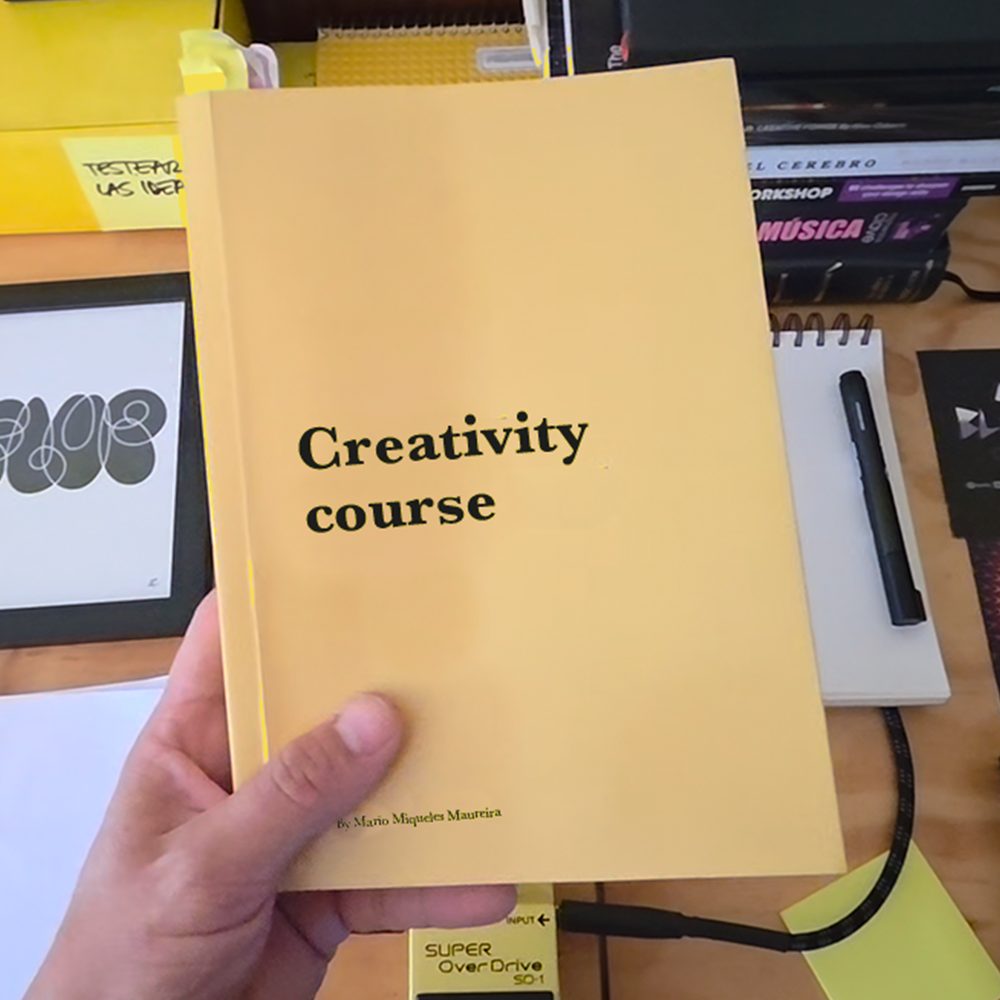
Creativity course (Book)
USD$ 50 -
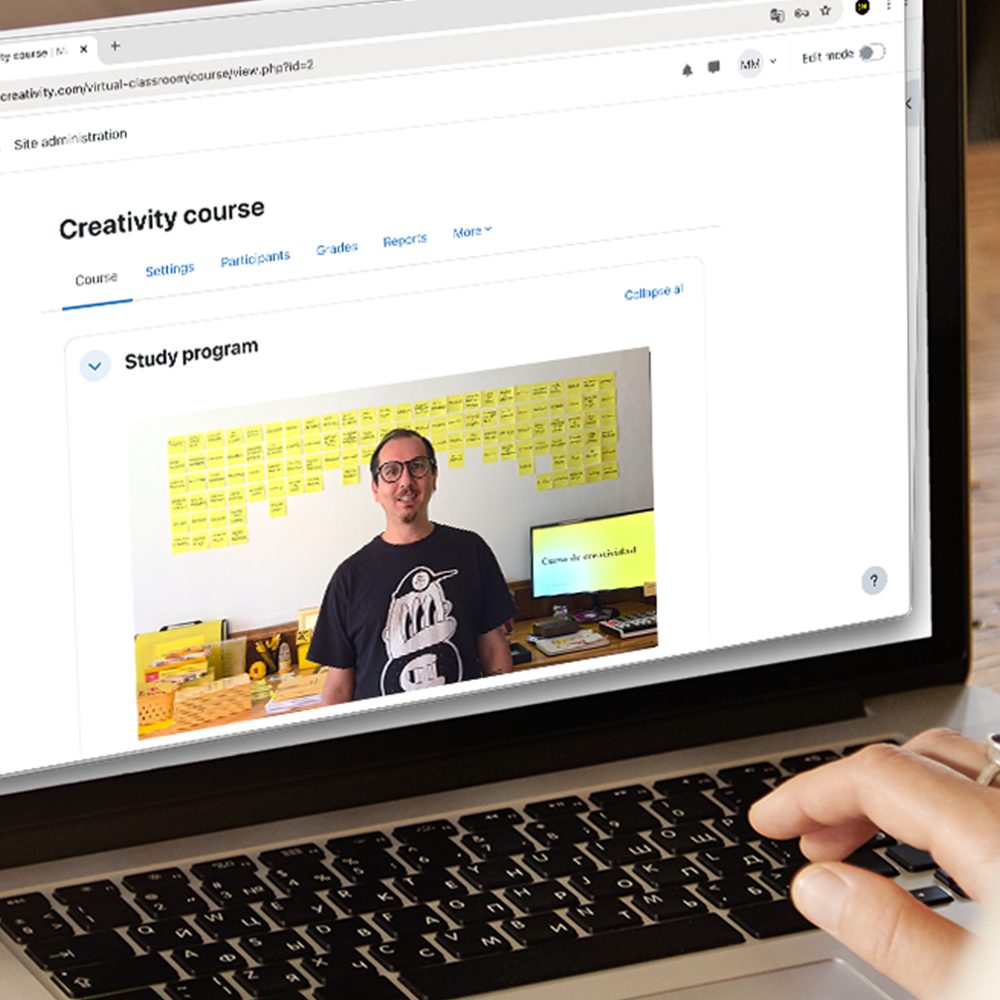
Creativity course (Online)
Original price was: USD$ 50.USD$ 40Current price is: USD$ 40.
- Brainstorming: The Four Rules, What the Research Says and the Variants That Work
 Brainstorming is the most widely used creative technique and one of the most studied. Its four rules, what the evidence says about group work, and how to run a session that actually delivers.
- Creativity at Work: How to Apply Creative Techniques in Teams and Organizations
 Most organizations declare that they value creativity, but very few have a strategy for cultivating it. What research says favors and blocks it, and what leaders and teams can do to help it flourish.
- Flow and Creativity: How to Create the Conditions for Your Best Ideas to Emerge
 Flow is the state in which a task absorbs your full attention and ideas arrive with unusual fluency. What it is according to Csikszentmihalyi, why it is tied so closely to creativity, and how to create the conditions for it.
- What Is Creativity According to Psychology: Definition, Theories, and Main Models
 Few words are used as often, and with as little agreement, as creativity. The main definitions, theories, and models in the psychology of creativity: Rhodes’s four Ps, mini-c and Big-C, Guilford, Wallas, Amabile, and Csikszentmihalyi.
- How to Assess Creativity in University Students (Without Falling Into Subjectivity)
 Assessing creativity doesn’t have to be subjective: research offers validated tools for doing it with rigor. The three dimensions that can be assessed, analytic rubrics, the Consensual Assessment Technique (CAT), and a minimal rubric for the university classroom.
- Divergent vs. Convergent Thinking: What They Are and Why Both Matter in the Classroom
 Creative thinking is not a single process but the combination of two: divergent thinking, which generates many possible answers, and convergent thinking, which selects the most appropriate one. What each is and how to integrate both in the classroom.
- Creativity and Problem Solving: The Method That Changes How You Think
 Almost every problem-solving method assumes the problem is already well defined, but most real problems don’t work that way. What creative problem solving (CPS) is, what the evidence shows, and how to apply it in your work.
- How to Develop a Creative Mindset: A Practical Guide for Professionals
 The creativity people admire in others is not an innate trait: it comes from habits, conditions, and practices that can be learned. What the research says and five concrete habits for building a creative mindset at work.
- What Is Design Thinking and How to Use It in Higher Education
 Design Thinking has moved from design firms into university classrooms. What it is, its five stages, what research says about its impact, and how to start using it without redesigning an entire program.
- 5 Creative Thinking Techniques Every University Educator Should Know
 Creativity appears in nearly every university graduate profile, but it rarely reaches the classroom. Five science-backed techniques for teaching it: divergent thinking, the Six Thinking Hats, SCAMPER, mind maps, and creative problem solving.
Free guide for teachers
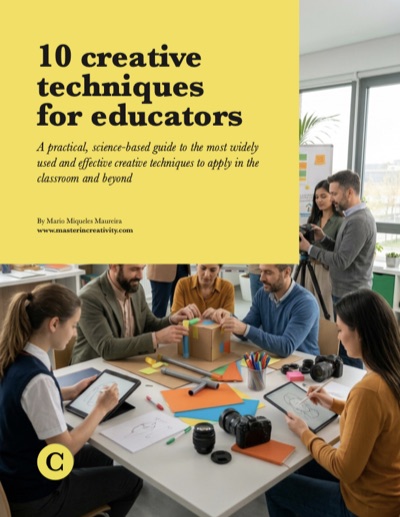
10 research-backed creative techniques, ready to use in the classroom.
Research on creativity
- Teaching Creative Thinking: What the Torrances Learned From 142 Experiments

- Concept Maps: Novak’s Theory and How to Build One Step by Step

- Divergent Thinking Tests: Why They Measure Creative Potential, Not Creativity

- From the Classroom to the Nobel: The Four C Model of Creativity

- Amabile’s componential model of creativity. When the environment becomes variable.